
The Uncomfortable In-Between
The Uncomfortable In-between
It’s another boring day at work. You sit at your desk, forcing yourself through a clerical task that makes you want to poke your eyes out just to escape the monotony.
How did this happen again? A year ago, this was an exciting opportunity. Now, it is drudgery. You ask yourself: Am I broken? Did I fail? Do I just have the attention span of a gnat?
Well, the answer is most likely no. You are growing. You are outgrowing an old job, belief, relationship, or identity. Your internal landscape has shifted, and you are simply moving into your next step.

The Restlessness of Growth
There is a restlessness that comes when you’ve done the internal work, but your physical world hasn’t quite caught up yet. It’s like your foot has grown from a “size 5” to a “size 7” but your new shoes are still on backorder.
Transitions like graduating from college, the two-week notice period of the old job, or certain relationship transitions, are standard societal norms with roadmaps, milestones, and tangible timeframes.
But how do you navigate abstract transitions like increased self-worth, setting better personal boundaries, or learning to be more authentic? How do you navigate life when your internal landscape has shifted, but your external world still looks the same? Without a roadmap, clear milestones, or a firm timeline, how do you navigate the uncomfortable in-between?
Understanding Your Growth Cycle
For some, this type of growth happens once a decade; for others, it’s a bi-annual cycle. There is no "right" timing — there is only your timing.
Growth is exciting, but growth cycles include the in-between space, the transition from the old to the new. In many ways the new has already been created, but the physical world hasn’t caught up yet. It’s the space where your values have changed, but your daily habits are still on autopilot, still serving a "size 5" foot when you’re now a "size 7."
This uncomfortable, yet powerful, "in-between" space is part of deep personal transformation, but transformation unfolds on its own timeline. It doesn’t need forcing — it needs patience. Trust plays a role here; trust in yourself, trust in the process.
The Trap of Extremes
Depending on your personality, you might find yourself wanting to move too fast or too slow. Both can backfire.
The Spontaneous Leap: If you’re prone to spontaneity, you might "blow up" the old life prematurely. Quitting a job before securing the next paycheck or ending a relationship that could have evolved with you. This can put you into survival mode, consuming the energy you need for growth.
The Stability Stall: If you value security, you might stay in a soul-starving job for years because it meets your basic needs. You stay “secure” while your soul withers.
How to Navigate the Uncomfortable In-between
So how do we navigate the uncomfortable in-between in a way that serves us best?
1. Get Comfortable with Discomfort. This borrows from Eastern philosophy: learn to sit with discomfort. Explore what comes up — perhaps a restless urge to “fix” the situation — and simply sit with the feeling without immediate action. This stillness is more powerful than you might realize; it’s a way of collecting information on your underlying motivations and gaining clarity on the results you truly desire. It allows you to release “old baggage” — those outdated beliefs and habits that keep you tethered to the past and inhibit your step into the new.
To address the physical discomforts of this shift — such as restlessness or irritation — a physical practice can be immensely helpful. Moving your body provides a necessary physiological release of stress chemicals and helps to ground the internal work you’re doing.
You can think of this phase as a two-part clarity and clearing system:
A Meditation Practice: helps clear the “mental muck”, allowing clarity and space for new insights.
The Physical Routine helps clear the stress chemicals out of your system.
A quick side note here: we are discussing the discomfort of internal growth. If you are in a dangerous or abusive situation, immediate external action is the appropriate and necessary response.
2. Reserve Your Energy. Stop trying to fix the "size 5" shoe. If you’ve committed to moving on, do the bare minimum required to maintain your current responsibilities. Save energy for your new manifestation — the new habits, the new business, the new you. Let the fresh passion fill your reservoir and help support the demands of the transition.
3. Don’t Blow Up the Old (Yet). You can trust in the unfolding of the new without destroying the old. Remember: what you are leaving behind was once your newest creation. We can build upon that foundation rather than blowing it up. Transitional trust doesn’t require a blind leap of faith or a dramatic gesture; it is trust in a process that evolves gently, providing a soft landing into the new.
Trust that the “size 7” shoes will arrive, not when you impulsively abandon your current situation, but when you’ve sufficiently cultivated the new identity, the new practices, and the new ways of being.
Progress, Not Perfection
On the other side of the “in-between” is progress, not perfection. The “new” doesn’t need to be perfect; it just needs to serve you better than the “old”. Waiting until you are "perfectly ready" keeps you paralyzed and stuck in the "in-between". Move toward better, not perfect. You can refine your path once you've started walking it. When navigating the uncomfortable in-between transition period — good enough is, well, good enough.
The Systems of Progress: A Historical Perspective
The idea that "perfection is the enemy of progress" isn't new:
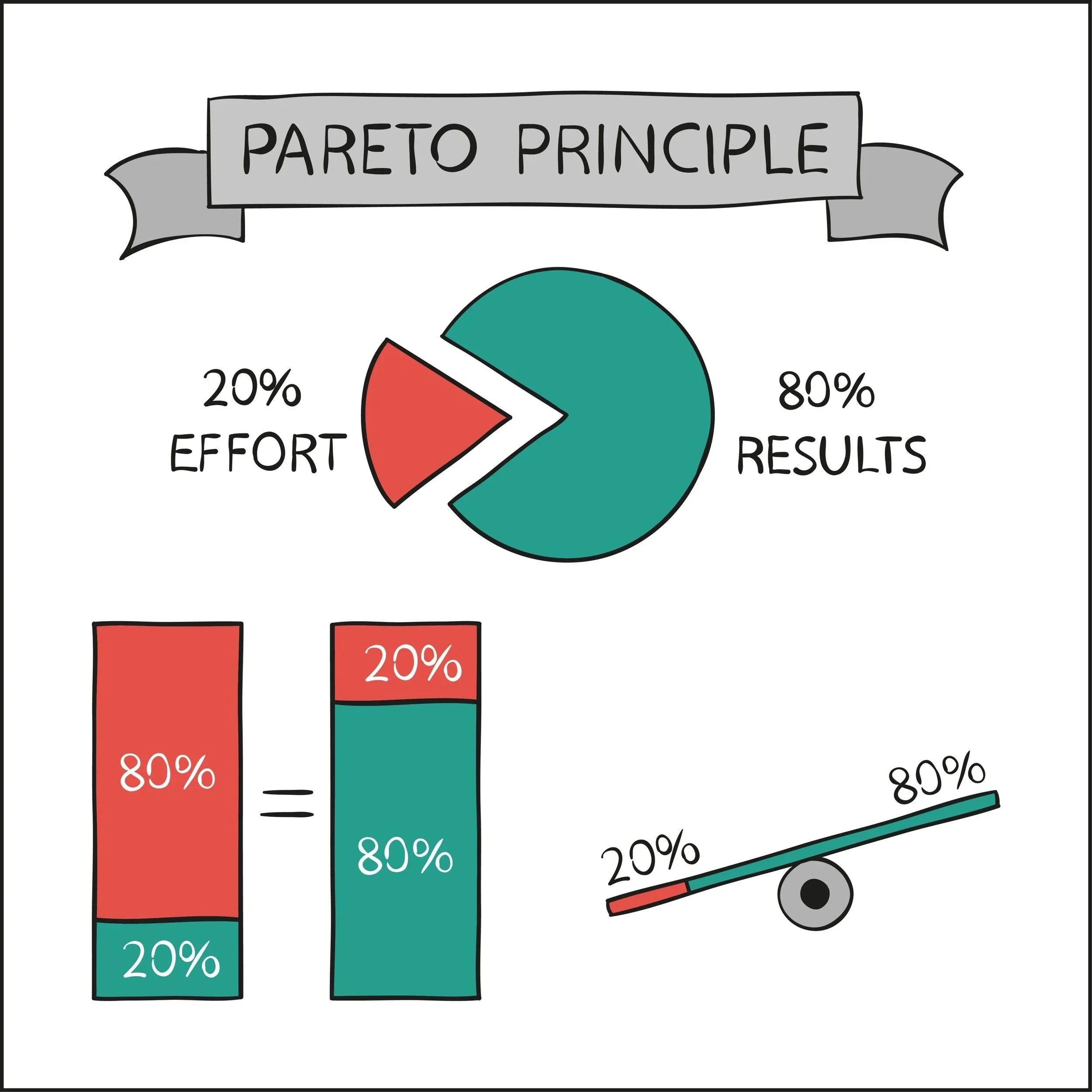
The Pareto Principle (The 80/20 Rule named after 19th-century economist Vilfredo Pareto): 80% of your results come from 20% of your effort. Stop "moving commas around" in your life and focus on the 20% that makes a meaningful difference.
The Law of Diminishing Returns: This is the economic "tipping point." It suggests that after a certain level of effort, each additional hour you spend refining something yields smaller and smaller improvements until you’re actually draining your energy for almost no gain.
"B—Minus” Work: As Brooke Castillo, a modern psychologist, suggests, "A" work is often just a mask for perfectionism. "B—Minus” work actually gets finished and put into the world.
70% Rule: Amazon founder Jeff Bezos suggests making decisions when you have 70% of the information you wish you had. If you wait for 90%, you’re already too late.
At their core, these concepts share a single truth: Taking action, even if it’s a little messy or incomplete, allows us to move forward. Using "perfection" as a standard is often just procrastination, keeping us stuck in the "uncomfortable in-between."
You don't need the "perfect" ending or the final answer right now. If you can recognize that “20% of your focused effort gets you to 80% good enough," or that proceeding with 70% of the information is plenty to start, you get the energy moving, you release fear, you give yourself permission to take a step without knowing the full story. “Good enough” gets your ideas out in the world where they can do some good and build momentum.
Good Enough Invites Connection
There is a hidden cost to chasing perfection: it often makes you inaccessible. Most people are navigating life at 80% capacity—or much less on difficult days. When we present a "100% perfect" version of ourselves, we create a gap that is difficult to bridge.
Perfection energy can feel cold, judgmental, or intimidating; it acts as a barrier rather than a bridge. It keeps us safely hidden behind procrastination, never submitting our ideas to the universe for feedback. Conversely, the energy of "good enough" is accessible and leaves room for real connection, meeting people exactly where they are.
When I share insights that are still evolving, I am inviting you into the "uncomfortable in-between" with me. It signals that you don't have to be finished, fixed, or flawless to be valuable. You don’t have to have a perfectly polished idea to provoke interesting and useful insights.
Perfection is a museum exhibit you can only look at; “good enough” is a warm kitchen where you can sit down, be real, and connect with others.
Trust the journey. Trust means sitting in the uncomfortable in-between, knowing that this part of the transformation journey is valid. Get comfortable with discomfort, reserve your energy for the “new,” and be patient. Your new shoes are on their way. For now, your feet are bare — so tread lightly, and don't forget to find delight in wiggling your toes.